Saturday, November 15, 2014

Peruvian Treasure

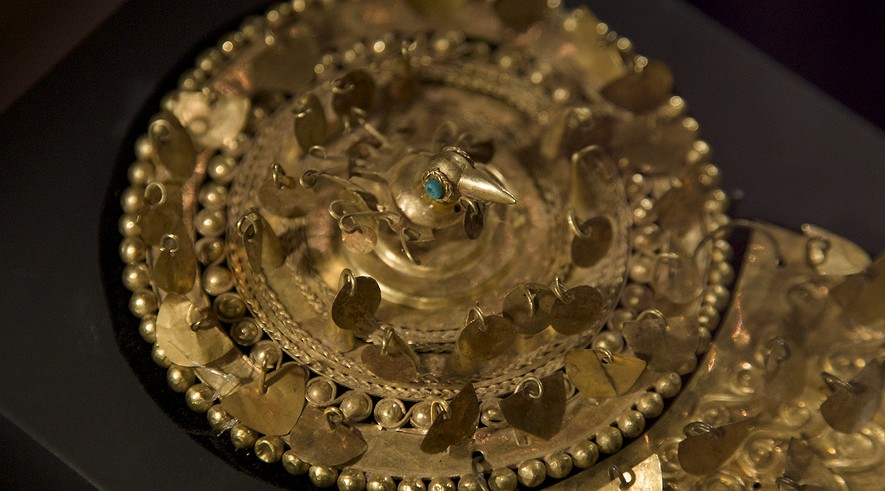
In Peru, an ancient, golden headdress was found, along with about 100 more artifacts. Its name is El Tocado meaning "the headdress" in Spanish. This headdress is possibly one of Peru's greatest finds. This find of El Tocado can lead to the history and background of Peru along with more archeological finds. The Peruvian government is now tearing down forests ad destroying the homes of plants and animals for more of these finds. The government said it will do anything for more of these archeological finds.  


https://newsela.com/articles/peru-gold/id/5437/


Saturday, November 1, 2014

Cuba's Instruments

I'm surprised that one of the places in the world known for music is running low on instruments. Before Cuba's revolution in 1959 many people played violins, cellos, violas, and basses from the workshops of Europe. After the revolution Cuba wasn't able to trade with anyone but the Soviet Union and China (geography). The wood they use are not as high of quality as the rosewood from Europe. So, to make things easier on the country a shop as been opened up in Cuba to make wooden instruments for the country of Cuba. The shop measures (math) and repairs the pegs and strings. The shop has now been opened about three years and has repaired about 400 wooden instruments. The workers of the shop plan to stay opened and hope it can stay open just through donations given.


https://newsela.com/articles/cuba-violins/id/5668/


Sunday, October 19, 2014

Music Therapy

Did you know that music could make you feel better? Solo instruments could make you recover more quickly. The harp or violin (Orchestra) are prime examples. People who listened to these instruments proved to recover quickly, this lower their blood pressure and calmed their nerves (Biology).


http://www.npr.org/templates/story/story.php?storyId=120768762


Sunday, September 28, 2014

Man Tricks Muesems for Years

    For 30 years, Mark Landis went to museums all over the country donating "real paintings" to museums  (geography). These museums did not know these donated paintings were fake until now. He fooled  museums by getting microscopes (biology) and magnifying glasses and comparing every single drop of paint and every single place where the color went into the painting. The FBI looked into the case and said that there was no crime since Mr. Landis did not ask for money. At the age of 17, Landis was diagnosed with schizophrenia, a mental illness,  it is believed that making these fake paintings helped to calm his mental illness (Blair, 2014). Landis duped about 45 museums without anyone figuring him out. The FBI says "he just wanted to find a place in the world."

Landis' Mona Lisa
Real Mona Lisa


             Blair, Elizabeth. "Art & Craft Explores How One Forger Duped More Than 45 Museums." NPR: Sam Cullman. 27 September 2014. Web. 28 September 2014